
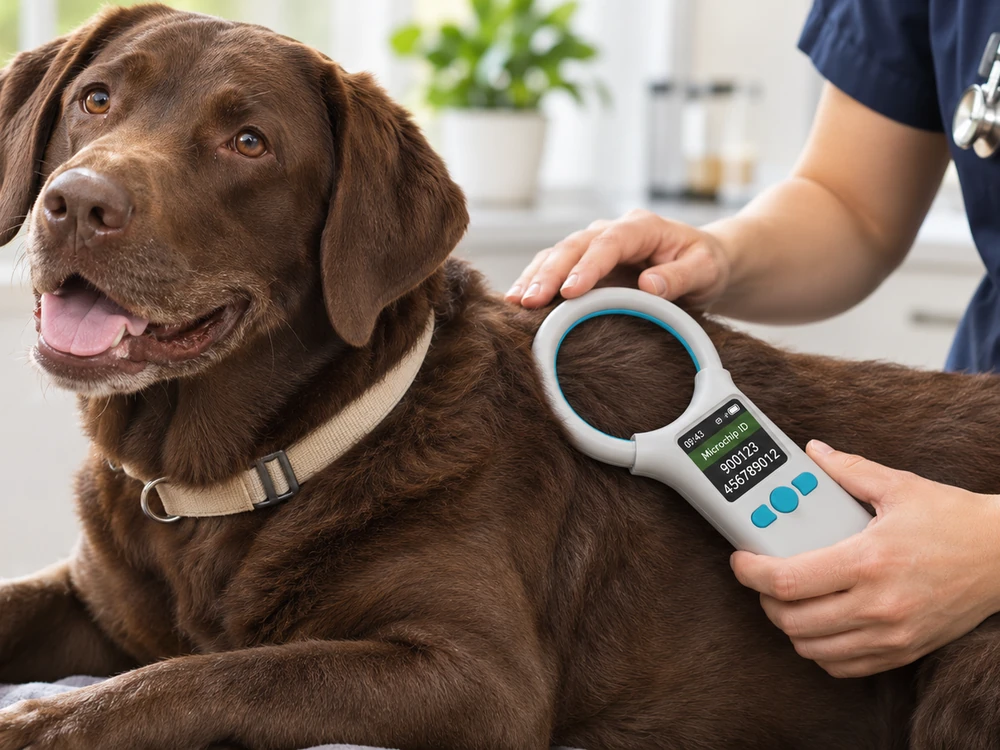
If you come across a pet microchip that starts with 900, it can help you track down the animal’s owner. While several manufacturers use this prefix, ChipTrace can still identify the manufacturer by checking the number ranges listed in ICAR’s certification list.
So, if a registration search comes up empty, you still have options. You can use the manufacturer information to trace the chip through the companies or organisations that supplied or implanted it.
If you’ve found an animal or want to check your own pet’s microchip, here’s how you can use that number.
In this guide
- What does a 900 microchip number mean?
- Which country does a 900 microchip come from?
- Can ChipTrace identify the manufacturer?
- Can a 900 microchip be registered?
- How do you trace a microchip starting with 900?
- What if no registration is found?
- Does 900 tell you anything about quality?
- What should you check for your own pet?
- Useful links
What does a 900 microchip number mean?
In the standard 15-digit animal identification format, the first three digits contain a country code or a manufacturer code. The remaining 12 digits complete the identification number.
900 is a shared manufacturer code. Several manufacturers use it, with allocated number ranges distinguishing their chips.
ICAR, the International Committee for Animal Recording, administers these allocations. Its certification procedures explain how manufacturers receive identification numbers for use with the shared code after a successful conformance test.
The shared prefix doesn’t mean the complete numbers are shared. Each allocated range is reserved for its assigned use, helping keep the full identification numbers unique.
You can think of 900 as the start of an address. To find the exact place, you need the rest of the number.
For more about prefixes and formats, read Pet Microchip Numbers Explained.
Which country does a 900 microchip come from?
900 is a manufacturer code, so it doesn’t identify a particular country.
A chip with this prefix can be supplied and implanted in different countries. The manufacturer’s address also doesn’t necessarily tell you where the animal was chipped.
When tracing, it’s important to keep your search options open.
If you find a cat in Spain, start with the relevant Spanish searches. If its paperwork or known history points to another country, check there too.
Manufacturer information adds another useful clue. Following the supplier’s records can help establish where the chip went after it left the manufacturer.
Using both the microchip number and the animal’s history gives you the best chance of finding answers.
Can ChipTrace identify the manufacturer?
Yes. ChipTrace covers all manufacturers listed in ICAR’s certification list, using the recorded identification ranges to match the complete microchip number.
You don’t need to work through the ICAR certification list yourself. Enter the full number in the ChipTrace microchip lookup, then check the manufacturer information and contact route shown in the result.
The first three digits are just the beginning. ChipTrace uses the rest of the number to tell which range it belongs to.
Finding the manufacturer gives you a practical next step. The company may have records showing which distributor, clinic, shelter or other organisation purchased the chip.
This may not give you the owner’s details right away, but it can help you get closer to finding them.
ChipTrace covers the manufacturers and number ranges listed by ICAR. If the number doesn’t match any published range or there’s no verified contact, you can use the ICAR backup option explained below.
Can a 900 microchip be registered?
Yes. A microchip starting with 900 can have a registration record linking the animal to its owner’s contact details.
The manufacturer makes the chip, while the registry keeps the information linked to its number. Some companies do both, but these are separate parts of the system.
For your own pet, use the registration process for the country where you live. Our country guides explain the relevant systems and practical steps.
A scanner shows the chip’s number. Checking the registration makes sure someone can use that number to contact you.
Both steps are important.
For practical next steps, read our guide to how to register a pet microchip.
How do you trace a microchip starting with 900?
1. Check the complete number
Start with the scanner reading where possible. Compare all 15 digits with any passport, vaccination record or adoption paperwork available.
Make sure to include every zero, even those right after 900. Double-checking the number now can save you time and effort later.
2. Search with ChipTrace
Enter the full number in the ChipTrace microchip lookup.
Check both parts of the result:
- Registration results, which direct you to a database holding a record.
- Manufacturer information, which helps you follow the chip’s supply history.
If you find a registration, start there. If not, use the manufacturer details as your next step.
Also check the relevant country guide for national or regional searches that need a separate enquiry. For an animal with a known connection to the United States, use the AAHA Microchip Registry Lookup directly.
3. Follow a registration result
Contact the registry shown in the result and explain that you’re trying to reunite a found animal with its owner.
The registry can guide you through its process for contacting the registered keeper. Public lookup tools generally show you which organisation holds the record, rather than displaying someone’s private contact details.
If a vet or shelter is helping you, share the search result and the full microchip number so they can keep looking.
4. Use the manufacturer contact route
If no registration is found, follow the manufacturer or distributor contact route shown by ChipTrace.
Provide the complete number and ask whether the company can identify:
- the distributor that received the chip;
- the clinic, shelter or organisation that purchased it;
- any available supply or implantation records connected to that number.
You don’t have to find every link right away. The manufacturer might point you to a distributor, who could then direct you to a vet. That vet may have the animal in their records.
Each answer helps you narrow down where to look next.
One benefit of tracing through the manufacturer is that an animal might have a record outside the usual online databases.
5. Ask ICAR if no verified contact route is available
If ChipTrace doesn’t show a verified manufacturer or distributor contact route, contact ICAR for help checking the current certification record and identifying an appropriate manufacturer contact.
Include the complete 15-digit number and briefly explain which searches or enquiries you’ve already tried.
Ask whether the number falls within a recorded allocation and whether a current manufacturer contact is available.
Suggested contact: ICAR — international certification body
Email: icar@icar.org
ICAR’s role here concerns certification and manufacturer information. Follow any manufacturer contact it provides to continue tracing the chip.
What if no registration is found?
There are still helpful steps you can take.
First, double-check the number and see which searches actually finished. If a database timed out, it doesn’t mean the chip isn’t registered.
Next, use the manufacturer or distributor details from your ChipTrace result. Also, use any information about the animal’s country history to guide more registry searches.
For example, a rescue cat may now live in Spain but have earlier records in another country. Its adoption paperwork, former shelter or veterinary history can help you decide where to look.
Write down which organisations you contact and what they say. This way, everyone can work from the same information and avoid repeating searches.
Our guide to why a microchip isn’t found in a database explains the broader possibilities. If you’ve found an animal, also read Found a Microchipped Pet?
Does 900 tell you anything about quality?
The 900 prefix just shows a shared manufacturer code. It doesn’t say anything about quality.
ICAR certifies products that use this code. Just because a chip starts with 900 doesn’t mean it’s low quality.
Certification relates to the particular product, while registration connects the individual animal’s number to its keeper.
If you’re tracing a pet, focus on using the full number, checking for registration, and following up with the manufacturer if needed.
What should you check for your own pet?
If your pet has a 900 microchip, the best thing you can do is check the record linked to it.
- Confirm which registry holds your pet’s registration.
- Check that the registered number matches the chip your vet reads.
- Make sure your telephone number and other contact details are current.
- Keep the registration confirmation with your pet’s paperwork.
If you’ve adopted your pet, confirm that the registry has completed the keeper update. The adoption agreement and microchip registration are separate records.
A 900 microchip offers more information than just the first three digits. ChipTrace can help you find the manufacturer, and supply records can give you another way to trace the chip if registration doesn’t turn up anything.
Begin with the full number, check the results, and keep following up as long as you have leads.
Luna doesn’t need you to remember her manufacturer. She just needs whoever scans her chip to be able to find you.
Useful links
ICAR — certification procedures and shared manufacturer codes
ICAR — certified devices and allocated identification ranges