
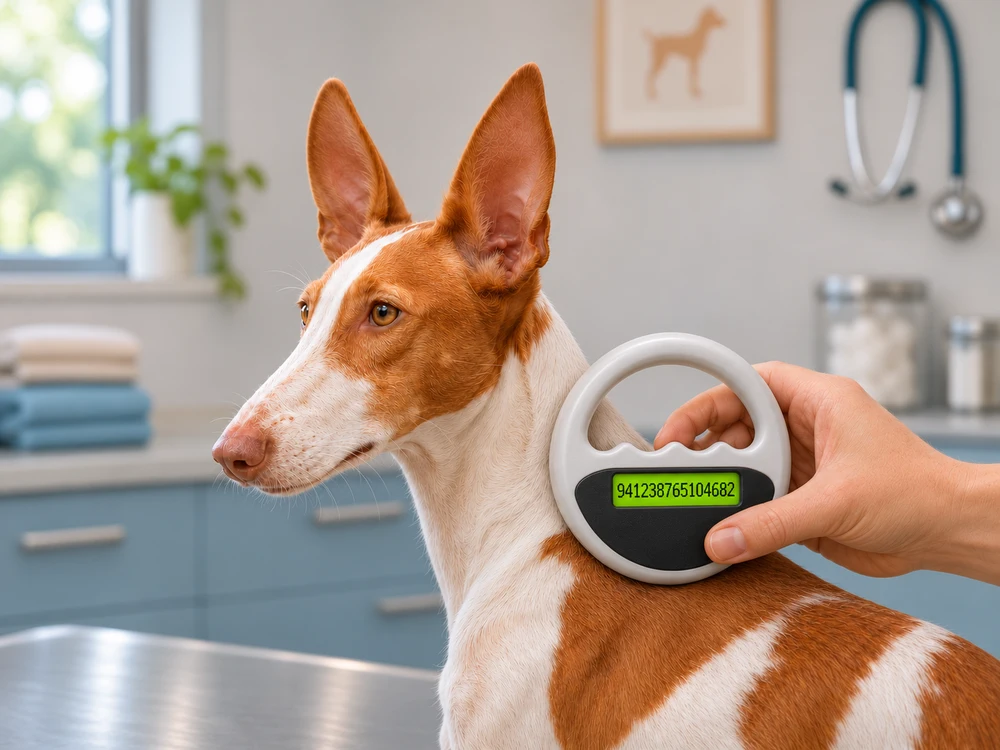
Found a dog or cat with a microchip beginning with 941? You might be wondering who manufactured it, which country it came from, or where to find the owner’s registration.
The good news is that 941 is a recognised manufacturer code, so we have a useful starting point. It’s associated with Felixcan, a Spanish animal identification brand belonging to the international Datamars Group.
But 941 microchips aren’t limited to Spain. They’re also used in the United States and distributed in other countries.
Let’s find out what the prefix means and, more importantly, how to trace the registration.
In this guide
- What does the 941 microchip prefix mean?
- Who manufactures 941 microchips?
- Does a 941 microchip come from Spain?
- Are 941 microchips used in the United States?
- How does ChipTrace search for 941 microchips?
- What if your 941 microchip isn’t found?
What does the 941 microchip prefix mean?
Most modern pet microchips contain 15 digits. The first three digits may identify a manufacturer or the country responsible for the identification number.
941 is a manufacturer code, not a country code.
It is registered with the International Committee for Animal Recording (ICAR) to Datamars Ibérica, the Spanish company behind the Felixcan brand.
Felixcan produces 15-digit FDX-B microchips operating at 134.2 kHz, the international standard used for most modern pet microchips.
The number identifies the manufacturer, but it doesn’t tell you where the animal was chipped or registered.
For more information about number formats, see our Pet Microchip Numbers Explained guide.
Who manufactures 941 microchips?
The story behind 941 is a little more interesting than you might expect.
Felixcan was founded in Spain in 1992 and joined the Swiss Datamars Group in 2017.
In January 2019, the Spanish company changed its legal name from Felixcan SLU to Datamars Ibérica SLU. However, Felixcan remained an active brand, and manufacturing continued in Albacete, Spain.
Older records may also mention Cromasa, an earlier company name associated with the same manufacturer code.
This means you may encounter three names when investigating a 941 microchip:
- Cromasa: An earlier company name.
- Felixcan: The established Spanish animal identification brand.
- Datamars Ibérica: The current registered manufacturer within the Datamars Group.
They’re connected through the history of the 941 manufacturer allocation.
You can find more information on the official Felixcan website.
Related manufacturer guides: 981 microchips and PetLink and 982 microchips and 24Petwatch.
Does a 941 microchip come from Spain?
Not necessarily!
Although Felixcan microchips are manufactured in Spain, they are also distributed internationally.
Felixcan Colombia, for example, supplies the brand’s identification products in Colombia, Ecuador and Central America.
The 941 prefix is also used in the United States, including by 24Petwatch. We’ll explain that connection in the US section.
This means a dog with a 941 microchip could have been identified in Spain, the United States or another country where the manufacturer’s products are distributed.
And even if the animal was originally chipped in Spain, it may now live somewhere completely different.
A manufacturer’s location doesn’t tell you where an animal’s registration is held.
The full microchip number is much more useful when trying to find the owner.
Are 941 microchips used in the United States?
Yes! The 941 prefix is also found in the American pet microchip market.
For example, 24Petwatch confirms that its microchips use the 941 and 982 prefixes.
Petkey also has records associated with 941-series microchips.
And there’s another interesting connection: PetLink belongs to the Datamars Group, just like Felixcan.
However, this doesn’t mean that every 941 microchip is registered with PetLink, 24Petwatch or Petkey. The manufacturer, distributor and registration database can be different organisations.
If you’ve found an animal with a 941 microchip in the US, its registration may be held by an American service rather than a Spanish one.
Start with the free ChipTrace microchip lookup.
If no registration is found, a manual check with the AAHA Universal Pet Microchip Lookup Tool may provide additional leads.
AAHA checks participating US registration services, but it doesn’t reveal private owner information.
For the wider registration and tracing routes, see our United States microchip guide.
How does ChipTrace search for 941 microchips?
ChipTrace searches connected microchip databases using the complete number, not just the manufacturer prefix.
One of those services is PetMaxx, an international microchip search tool operated by Datamars.
Yes, the same Datamars Group that owns Felixcan!
PetMaxx searches participating international databases to identify possible registrations. At the same time, ChipTrace checks its other connected lookup services worldwide.
This is useful because a pet may have been chipped in one country, registered in another and later moved somewhere else entirely.
However, PetMaxx doesn’t search every database in the world, and the Datamars connection doesn’t guarantee access to every Felixcan registration.
If a registration is found, ChipTrace directs you towards the relevant registry.
The registry, veterinarian or another authorised organisation can then help contact the registered owner. Private owner details aren’t displayed by ChipTrace.
Search a 941 microchip with ChipTrace
What if your 941 microchip isn’t found?
Don’t give up just yet.
A microchip that doesn’t appear in an online search isn’t necessarily unregistered. Its record may be held by a database that cannot be searched automatically.
Here’s what to try next:
- Check the full microchip number. Make sure all 15 digits were recorded correctly.
- Review the ChipTrace results. Follow any suggested registry or manufacturer tracing routes.
- Try additional databases where relevant. For an animal found in the United States, AAHA may identify a participating registry.
- Ask a veterinarian or authorised rescue organisation for help. They may have access to registration systems that aren’t publicly searchable.
- Contact Datamars for traceability assistance. The manufacturer may be able to identify the distribution route or suggest another organisation to contact.
Datamars has a microchip traceability form
Datamars provides a dedicated enquiry form for investigating individual microchip numbers.
This may be particularly helpful when a registration search doesn’t identify the correct database.
The manufacturer may be able to trace where a chip was originally supplied, although that doesn’t necessarily mean it can identify the animal’s owner.
Datamars microchip traceability enquiry form
In Colombia and its associated distribution markets, Felixcan also provides the Petxplorer registration platform for authorised veterinary professionals and organisations.
Again, this doesn’t mean every 941 microchip is registered there. It’s another possible route when the animal’s history points towards that region.
The important thing is finding the registration
A 941 prefix provides a useful clue: it is associated with Datamars Ibérica and the Felixcan brand.
But these microchips are used internationally, and the manufacturer’s location doesn’t tell you where the animal lives or which database contains its registration.
The complete microchip number is what matters most.
Whether you’re checking your own pet’s identification or trying to reunite a found animal with its family, start with the full number.
Search for a pet microchip with ChipTrace and follow the available tracing routes.